
Split AC vs Central AC Dubai: Which Is Better for Your Home?
Introduction
Choosing an air conditioning system in Dubai affects your comfort, electricity bills, and home maintenance needs. Split and central AC systems both offer reliable cooling, but they work differently. The right choice depends on your property size, room layout, existing cooling setup, and daily usage. Some homes benefit from independent room cooling, while others need a system that serves multiple spaces. This guide compares both options to help you understand which system suits your home.
Understanding Split AC vs Central AC Dubai
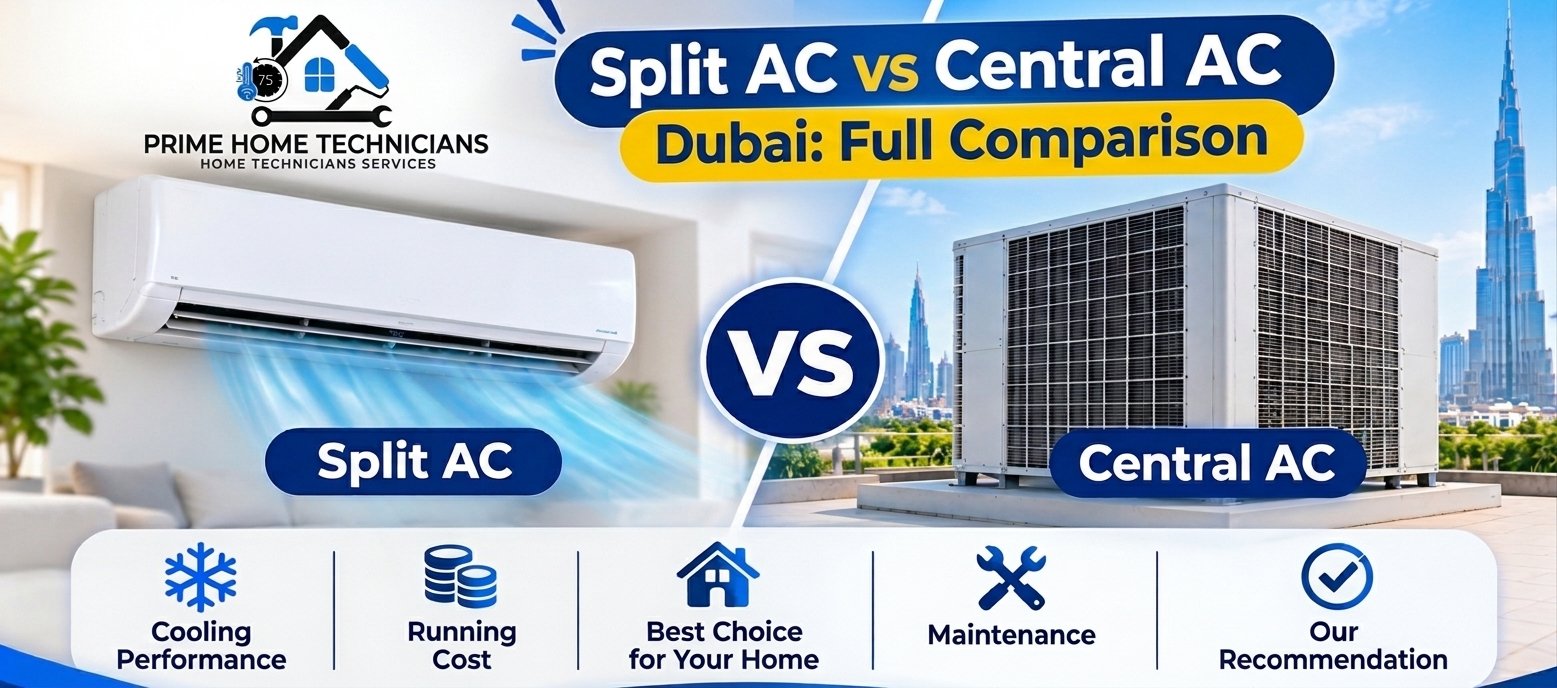
Before comparing costs and performance, it helps to understand how each system works. Our split ac vs central ac Dubai comparison starts with their basic design and cooling method.
How Split Air Conditioners Work
A split air conditioner has an indoor unit and an outdoor compressor. Refrigerant pipes connect both parts to transfer heat outside. Each indoor unit cools a particular room or area. This arrangement allows homeowners to control different rooms separately. Split air conditioners work well in bedrooms, smaller apartments, home offices, and spaces with independent cooling needs. However, larger homes may require several indoor and outdoor units.
How Central AC Systems Work
Central AC systems use a main cooling unit to distribute conditioned air through ducts and vents. These ducted AC systems can serve several rooms through one connected setup.
A central system usually offers a cleaner appearance because most equipment and ductwork remain concealed. However, installation depends on ceiling space, duct access, and the property’s existing design.
Some Dubai apartments also use building-provided chilled water systems with fan coil units. These arrangements differ from conventional central ducted AC, so residents should check their building’s cooling setup before choosing equipment.
Split AC vs Central AC: Main Differences
Both systems can cool a Dubai home effectively when correctly selected and maintained. Their main differences relate to installation, room control, space requirements, and ongoing expenses.
| Feature | Split AC | Central AC |
| Cooling coverage | Individual rooms or zones | Multiple rooms through ducts |
| Installation | Usually simpler for individual rooms | Requires ductwork and suitable space |
| Temperature control | Separate control for each unit. | Depends on system zoning |
| Indoor appearance | Visible indoor units | Mostly concealed equipment |
| Maintenance | Filters and individual units | Filters, ducts, coils, and main equipment |
| Best suited for | Apartments and selected rooms | Larger homes with suitable ductwork |
The table offers a general comparison. Actual performance depends on system design, equipment quality, and installation conditions.
Installation Requirements and Space
Installation requirements can influence your decision before you consider the purchase price. Split AC installation generally needs suitable wall space, outdoor unit placement, electrical connections, and refrigerant pipe routing. It can be practical when you need cooling in one or two rooms without changing the entire property. Central AC installation requires more planning. Technicians must assess duct routes, ceiling space, return air paths, equipment access, and cooling capacity.
For existing properties, adding ductwork can involve ceiling modifications. Homes with suitable ducts already installed may have fewer installation challenges. Before selecting either option, check your building rules and available installation space.
Cooling Costs and Energy Use in Dubai
Cooling costs depend on several factors, including unit capacity, operating hours, insulation, thermostat settings, and electricity rates. Neither system guarantees lower bills in every home.Split AC can help control electricity use when occupants cool only the rooms they need. For example, a family may run bedroom units at night without cooling the living room.
Central AC can suit homes that need consistent cooling across several connected spaces. Modern systems may also offer zoning features, allowing occupants to manage selected areas independently. However, a central system without effective zoning may cool unused rooms. Similarly, running several split units throughout the day can increase electricity consumption. For accurate cost planning, compare the expected usage of each system rather than relying only on its advertised efficiency rating.
Which System Suits Apartments and Villas?
Your property type can narrow down the available choices, but the existing cooling arrangement matters too.
Apartments
Split AC may suit apartments that need independent room cooling and have permission for separate outdoor units. It can also work well for smaller layouts.
However, many Dubai apartments have building-managed cooling arrangements. Residents should confirm whether their property uses split units, chilled water, or another central system.
Changing the existing setup may require building approval and technical assessment.
Villas
A villa may benefit from central AC when several rooms require regular cooling. Existing ductwork can make this arrangement practical, especially across larger living areas. Villa AC requirements vary with floor area, ceiling height, insulation, sunlight exposure, and room usage. Split units can also suit villas where occupants use certain rooms more often than others. They provide independent control without necessarily cooling the entire property.
Maintenance Requirements for Both Systems
Regular maintenance helps both systems maintain airflow and cooling performance. However, each setup has different service requirements. Split AC maintenance usually includes cleaning filters, checking indoor and outdoor coils, inspecting drainage, and checking refrigerant performance.
Central AC maintenance involves similar checks, along with duct inspection, vent cleaning, filter replacement, and airflow assessment. Dirty ducts or blocked filters can affect air distribution. Dubai’s dust and long cooling seasons make regular servicing important. A technician can recommend a maintenance schedule based on system condition and usage. If your AC struggles to cool, leaks water, or produces unusual noise, arrange an inspection before the issue affects other components.
Common Mistakes When Choosing an AC System
A low purchase price should not be the only deciding factor. Consider these common mistakes before making your choice:
- Ignoring cooling capacity: An undersized system may struggle to maintain comfortable temperatures.
- Overlooking installation space: Central systems need suitable duct routes and equipment access.
- Choosing without checking building rules: Apartments may have restrictions on outdoor units or cooling modifications.
- Ignoring maintenance needs: Both systems require cleaning and technical inspections.
- Comparing only electricity use: Operating costs depend on usage patterns, system design, and property conditions.
A proper assessment helps prevent avoidable installation and performance problems.
Frequently Asked Questions
Is split AC cheaper than central AC in Dubai?
Split AC often has a lower initial installation cost for a small number of rooms. Central AC may require more investment, especially when new ductwork is needed. Actual costs depend on property requirements.
Which AC system is better for a small apartment?
Split AC can suit apartments that allow independent units. However, check whether your building already uses a central chilled water system.
Does central AC consume more electricity?
Not always. Consumption depends on equipment efficiency, cooling capacity, zoning, insulation, and operating hours.
Do central AC systems require duct cleaning?
Yes. Duct inspections and cleaning help remove accumulated dust and support proper airflow when cleaning is needed.
Can I replace central AC with split units?
It may be possible, but building rules, electrical capacity, outdoor unit placement, and existing cooling arrangements must be checked first.
Which AC system needs more maintenance?
Central systems have additional components, including ducts and vents. Split systems also need regular filter, coil, and drainage maintenance.
Choose the Right Cooling System for Your Home
There is no single winner in the split ac vs central ac Dubai comparison. Split AC offers room-by-room control, while central AC can provide connected cooling across larger spaces. Your property layout, existing infrastructure, cooling habits, and budget should guide the decision. A professional assessment can help identify the right capacity and installation requirements before you invest. For help evaluating your home’s cooling needs, explore our split ac vs central ac Dubai service options or contact Prime Home Technicians for an assessment.